Written by Ella Norris, a native resident of China, and translated by her husband Scott Norris. Photographs used with permission of several very kind Chinese residents, 叶子,果子,and 燕子.
It would seem that there are no relationships that are used to directly expressing love in China’s culture.
Chinese people are intrinsically reserved by nature. So, regardless of whether you’re talking about relatives, spouses, or friends, Chinese people are not good at saying the three words “我爱你” (Wǒ aì nǐ, I love you).
Saying “我爱你” (Wǒ aì nǐ, I love you) aloud will always feel a little uncomfortable for the Chinese. Many husbands and wives go their entire lifetime without speaking the words “我爱你” (Wǒ aì nǐ, I love you) to their partner. My almost 60- year old parents are a living example.
Therefore, when Chinese people say “我爱你” (Wǒ aì nǐ, I love you) it depends entirely on where they are and who they are saying it to.
As an aside, please read this reminder.
Family Relationships – Expressing Love in China
When expressing love and concern, the overwhelming majority of Chinese households will choose other words than “我爱你” (Wǒ aì nǐ, I love you). Most are not used to gestures such as a hug. Most use indirect means to express their love to family members.
Between Siblings
Between siblings, the word 爱 (aì, love) is virtually never spoken. To show that they care, siblings usually ask how life has been recently. Or when saying goodbye, they might use the phrase “走了啊” (zǒu le a, I’m going now). Adding the sound 啊 (a) to this sentence adds no extra meaning, but makes the tone more affectionate.
This phrase is suitable to use with every family member. It subtlety shows care and an unwillingness to part with them.
Between Children and Parents
Like between other family members, in normal circumstances children and parents are simply not used to saying “我爱你” (Wǒ aì nǐ, I love you). However, there is one case where these words are spoken.
When a child is still young, the mother will often say “妈妈爱你!” (Māma aì nǐ!, Mummy loves you!) or “妈妈好爱你” (Māma hǎo aì nǐ!, Mummy loves you so much!). If it’s a father, 爸爸爱你!” (Bàba aì nǐ!, Daddy loves you!).
Habitually in everyday life when we express “I love you”, we’ll add a form of address like 妈妈 (māma, mummy) to the start of the sentence. Saying it without this addition would seem a little overdramatic and may take the other person off-guard.
Children would use 妈妈 (māma, mummy) or 爸爸 (bàba, daddy). Once grown up, you can say 妈 (mā, mum), 爸 (bà, dad) or 老妈 (lǎomā, mum), 老爸 (lǎobà, dad). The latter pair are more casual and mean you’re on good terms with each other.
“我爱你” (Wǒ aì nǐ, I love you) is suitable between couples, not family members. I can’t imagine what reaction my Dad would have if I said this while making direct eye contact. However, if I said “老爸我爱你” (Lǎobā wǒ aì nǐ, I love you Dad) it would be much easier for him to accept and understand.
Between Parents
There is a very great proportion of elderly husbands and wives who have been together for a lifetime, yet the wife has never heard the husband speak the words “我爱你” (Wǒ aì nǐ, I love you). Does this mean they’re not in love with each other? Not really.
This generation’s expression of love is less apparent than the younger generation. They incline towards using real actions to express love. For example, inviting their other half to a dinner date, gifting a present, or going to the cinema. Anything that people in love like to do together. They just won’t say “我爱你” (Wǒ aì nǐ, I love you).
So in this case, it’s very easy to create misunderstandings where the wife feels unloved or feels that the husband is not romantic enough. If the man can, for example, help share household chores each day, use real actions to take care of showing gratitude for what she has done for the family, then the woman won’t care if she doesn’t hear those three words “我爱你” (Wǒ aì nǐ, I love you).
If the man fails to show his love through action or make her feel his love, then conflict will arise.
Expressing Love Between Friends in China
Same-sex Friends
If people are hesitant to say “我爱你” (Wǒ aì nǐ, I love you) between family members, then you can imagine how difficult it must be for friends. If friends help us do something important and we want to express how grateful we are, or if we say goodbye to an especially good friend, then there are other ways we can use the word “爱” (aì, love).
Other than simply saying “谢谢” (xièxie, thank you) or “再见” (zàijiàn, goodbye) you can use “爱你!” (aì nǐ! Love you!). This is much more common among female friends. If you’re speaking to more than one friend you’d say “爱你们!” (aì nǐ men! Love you guys!). This is a little more casual. It won’t be misunderstood or create any weird, awkward feelings.
To emphasize: “我爱你” (Wǒ aì nǐ, I love you) is exclusively used by couples.
Opposite-sex Friends
In traditional Chinese culture, there is a distinction between man and woman. When giving and receiving objects, they should not even touch hands. Similarly, men and women, unless they are married, should not have anything to do with one another. Particularly when it comes to physical contact.
If your relationship becomes visible in some way in public, you’ll be mocked or punished terribly. Although modern society doesn’t carry out these punishments anymore, these notions still consciously exist in Chinese people’s thoughts.
So if you’re not boyfriend/girlfriend or husband/wife, then the best thing is not to say the word “爱” (aì, love). Especially when one or both of the parties already have another half. In this case, the word “爱” (aì, love) is very taboo.
For example, if I have a Chinese husband and I say “我爱你” (Wǒ aì nǐ, I love you) to another man then, regardless of whether it’s for an understandable reason, my husband would be humiliated and provoked. If it’s serious, it may impact your relationship.
As a result of this, the different ways to express love between opposite-sex friends are very few. There are many opposite-sex friends who, once one or both are married, will no longer be able to maintain their friendship.
There is a phrase in Chinese, “结婚后就没有异性朋友了” (jié hūn hòu jìu méi yǒu yì xìng péng you le) which means that after marriage, there can be no opposite-sex friendships.
Of course, if both parties are single then you don’t have to think about it too much. You can express whatever you want to. This is perhaps why these days more and more young people are in no rush to find a partner.
Couples in Chinese Love Culture
For heterosexual couples, there are distinct stages in the relationship. Chinese people are very aware of these: the first date, becoming lovers, getting married, and having babies. At each stage, the way to verbalise love is different.
The First Date
Before a relationship is solidified there may be many dates, but as long as the relationship is uncertain, we won’t flippantly say the three words “我爱你” (Wǒ aì nǐ, I love you). The meaning behind these words is deep, so when we’ve only just begun to date, the depth of understanding between one another isn’t deep enough. So, if you say “我爱你” (Wǒ aì nǐ, I love you) too quickly, you’ll leave the impression that you’re flippant with your feelings. You’re too easy to win over.
When we want to earnestly express this feeling for the first time, we’ll often say “我喜欢你” (wǒ xǐhuan nǐ, I like you). In the early stages of love, saying “我喜欢你” (wǒ xǐhuan nǐ, I like you) is actually not at all less powerful than “我爱你” (Wǒ aì nǐ, I love you). In fact, it may even be more so.
When women hear these words they’ll often be overwhelmed by emotion and happiness, because someone has professed love to them. Of course, this assumes that they both feel the same way about each other. Therefore, the phrase “我喜欢你” (wǒ xǐhuan nǐ, I like you) is very suitable for a couple in the first stages of their love.
After Your Relationship Is Certain
Once the relationship is a sure thing, it is more stable. At the same time, your understanding of your partner is greater every day. You can now abandon your initial reservation and care. You can act as you wish and be more bold or daring. You can even affectionately call your girlfriend “老婆” (lǎopo, wife) or your boyfriend “老公” (lǎogōng, husband). This is very common in China.
The most common way to make a public display of affection is to change your other half’s WeChat (WeChat is the most popular messenger/social media app in China) nickname to “老公” (lǎogōng, husband) or “老婆” (lǎopo, wife). This is acceptable even if the couple hasn’t been legally bonded by marriage at that time.
If the couple has been apart for a while, they may use WeChat to send a short message like “老公,我想你了” (lǎogōng, wǒ xiǎng nǐ le, Husband, I miss you); “老婆,我想你了” (lǎopo, wǒ xiǎng nǐ le, Wife, I miss you). If you want your message to express love, you might also say “老公我爱你” (lǎogōng, wǒ aì nǐ, I love you husband); “老婆我爱你” (lǎopo, wǒ aì nǐ, I love you wife).
It’s worth noting that the direct translation of husband/wife here sounds formal in English, but this is very affectionate, almost cute, in Chinese. The addition here also softens the overall strength of the phrase.
Marriage in Chinese Culture
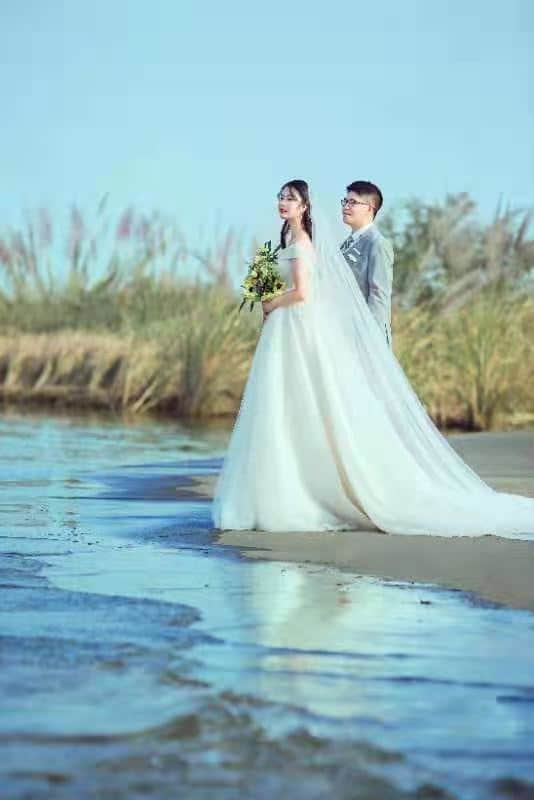
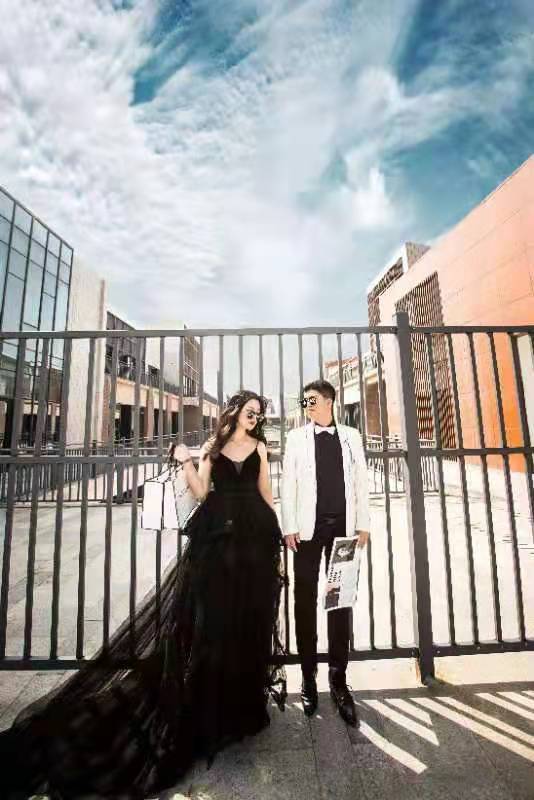
In Ancient China it was extremely important to pay attention to the formal, legal marriage process. If a man wanted to marry a woman, then he first had to find a matchmaker to act as an intermediary between the two families. The matchmaker would help to deliver each family’s thoughts and messages about the proposed bride and groom.
If the woman’s side decided the marriage is a good match, then the man’s side would bring gifts to propose to the woman’s side. These betrothal gifts were generally money and valuable objects like jewelry. Once the woman’s side accepts the betrothal gifts, there’s no going back.
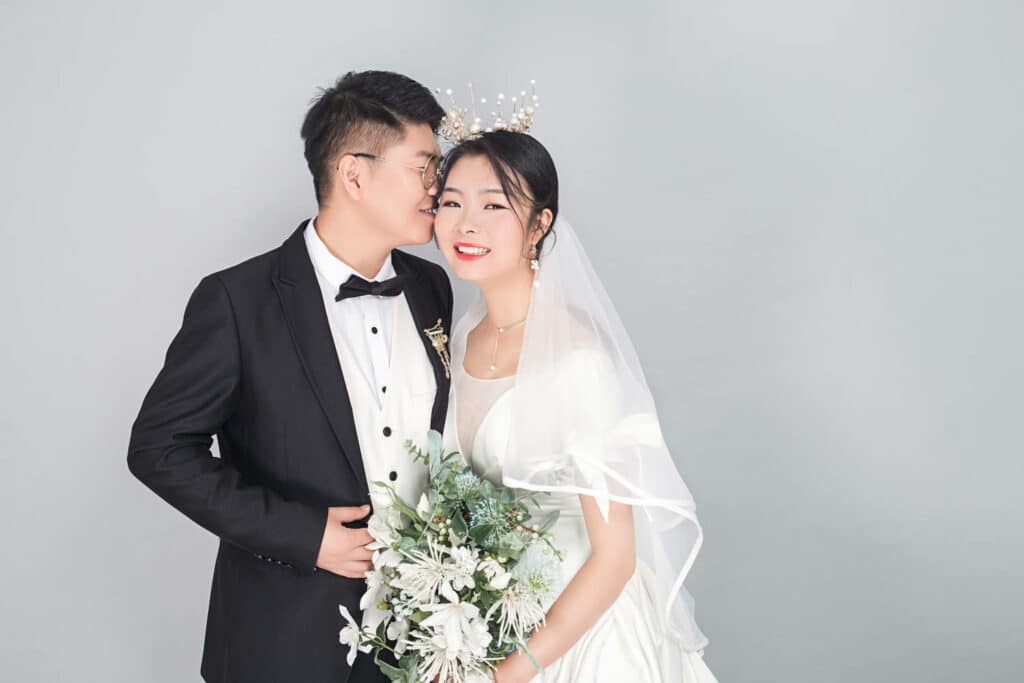
This tradition has been carried forward into the modern-day. Gifts are an extremely important piece of Ancient Chinese culture. The ancient Chinese government even had a specific department dedicated to this: The Department of Rites (礼部 Lǐbù, literally: gift-department). They governed cultural rites and ceremonies.
In most Chinese villages it’s still popular to give gifts and dowry. These are considered necessary because in farming villages, when your daughter is married off you will lose her assistance around the farm. So the money is seen as a form of compensation for this loss of labor.
However, nowadays, this makes many feel as if a trade is taking place. For Chinese people in the younger generation, this tradition is gradually being abandoned. In modern China, there are many marriages where no money is exchanged.
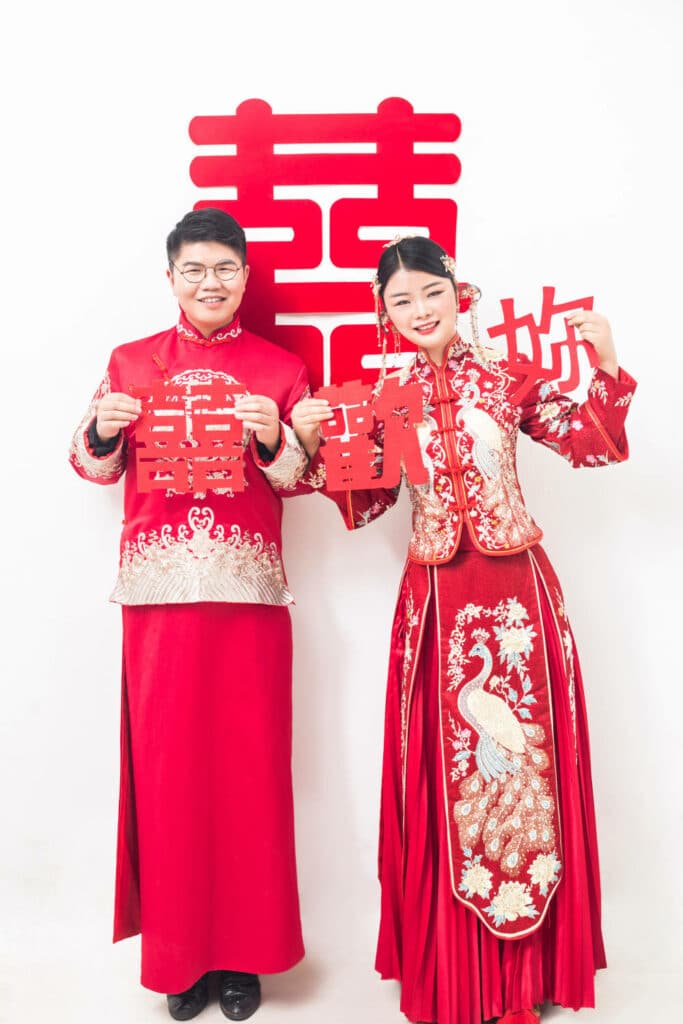
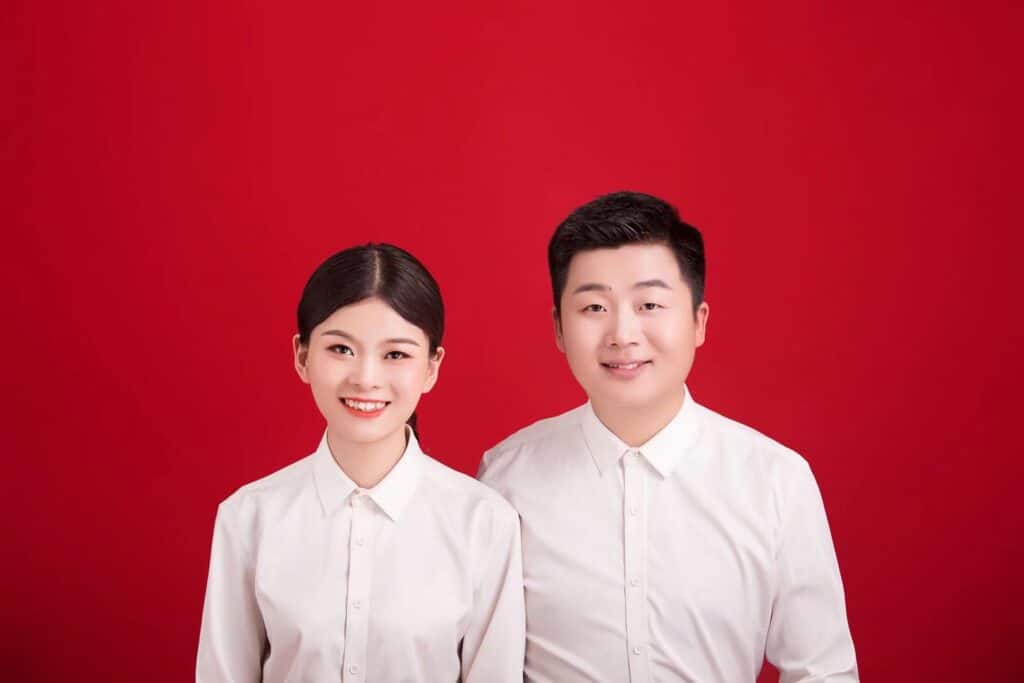
After marriage, after becoming legal husband and wife, the way for partners to express love can finally become as is proper and natural: “我爱你” (Wǒ aì nǐ, I love you). However, in everyday life, we’ll normally add “老公” (lǎogōng, husband) or “老婆” (lǎopo, wife) to the beginning of the sentence.
Saying the three words alone is still reserved for special occasions or special moments. For example, on some festival or commemoration when the husband wants to create a romantic atmosphere. He might bring his wife close and intimately say “我爱你” (Wǒ aì nǐ, I love you).
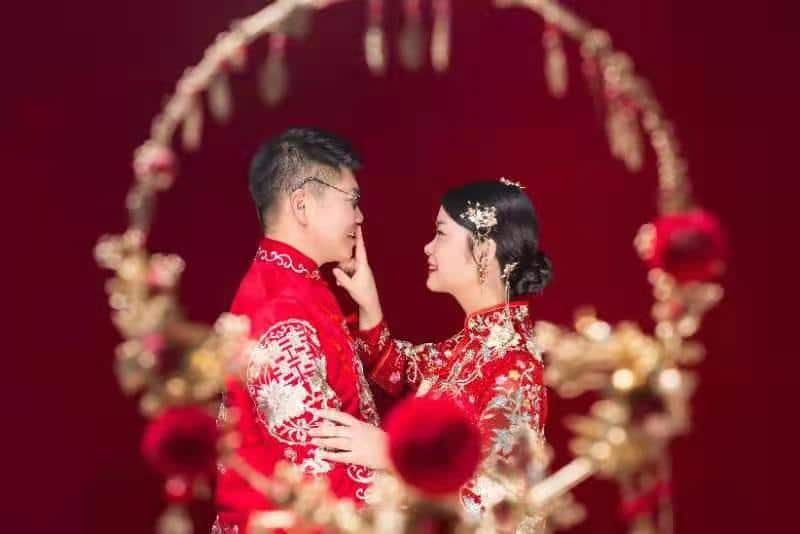
There are however many husbands and wives who are more traditional and reserved. Even though they’re married, they won’t say “我爱你” (Wǒ aì nǐ, I love you). This phenomenon is most common in men. Wives would love to hear these words, but husbands are unable to speak them.
This situation creates conflict between many couples because the wife erroneously believes that she is unloved. The husband knows that he truly loves her, so why must he say the words “我爱你” (Wǒ aì nǐ, I love you)?
There are also some couples that, when apart from one another, will be able to say “我爱你” (Wǒ aì nǐ, I love you) through WeChat messenger, but when they are face-to-face are very much unable to speak the words out loud.
Giving Birth
When women have children, their identity changes from girl to mother in the blink of an eye. Responsibility and calling strengthen. At the same time, the heart and body are exhausted by the recent experience and process.
At this moment, the husband should be beside the bed and say to her “老婆辛苦了” (lǎopo xīnkǔ le). A simple sentence. It not only contains the husband’s love, but also his gratitude and emotion. It’s hard to translate literally as it encompasses a range of emotions, but the general sense is “Wife, you have done so much, and I am so grateful for it all.”
At this moment, women are more ready to hear their husband’s deep affection“老婆辛苦了” (lǎopo xīnkǔ le, wife you have done so much) rather than “我爱你” (Wǒ aì nǐ, I love you). The former expresses not only the husband’s love but also appreciation and acknowledgment.
Wedding Anniversaries in China
Chinese people don’t attach any great importance to wedding anniversaries. Especially people born before the ’70s. For example, when celebrating a 50th wedding anniversary, normally it is left solely to the children to make arrangements.
For husbands and wives of this age, they’re unlikely to say the three words “我爱你” (Wǒ aì nǐ, I love you). This is due to a particular Chinese concept. When people get older and still declare their love openly, it is believed that they’ll be made fun of by other people. Therefore, they’re too shy to speak out. At the most, people will say “老伴辛苦了” (lǎobàn xīnkǔ le, old partner you have done so much) or assuming that their surname is Wang “老王辛苦了” (lǎo Wáng xīnkǔ le, old Wang you have done so much).
When the elderly speak this phrase to their life partner, it is imbued with a father’s and mother’s lifetime of love.
Same-sex Couples
Same-sex love has not yet been legitimized in China. Therefore, many same-sex couples must endure pressure from society. Most people choose to hide because they are worried about views or comments from others, even to the extent that they won’t let their own family know. You’re lucky indeed to find a partner if you are homosexual, as this means there’s someone willing to show their true self to you.
Recently in China, two women were married. One was the student of a famous dancer. Their marriage video went viral and thus created an example for many like them.
They bravely announced they want to be togethe, and their marriage to the world. They received both families’ blessings and held a grand wedding ceremony.
China’s society is little by little beginning to accept same-sex couples, but there’s still a long way to go. I hope that in the future every person is able to courageously seek the life that they want.
Loving Openly In China
As you’ve seen, the different ways of expressing love in China are very subtle. Adding or removing a single word can help you to avoid or make you subject to embarrassment.
Not only words, but actions too are crucial. If you’re in a public space like the subway and kiss or hug your other half a little too passionately, you may be subject to a sudden wave of contemptuous looks. That being said, if you meet a loved one at an airport, it’s perfectly okay to embrace and kiss them.
People’s concept of love is leaning more and more towards an open-minded and forgiving ideology as generations evolve. Bad traditions are being left behind and people’s rights are expanding.
I was born in the nineties. Perhaps our next generation won’t have to worry about dowry and proposal gifts. Perhaps external factors will no longer influence the love between two people in China. Perhaps there will only be love.
If you enjoyed this article, please read the others in the Love Series. All of them are linked there and are a good cultural learning opportunity.
Please share with your friends using the buttons below and sign-up for our newsletter to receive advice straight in your inbox.
]]>Written by Md Sagor Hossen, a native resident of Bangladesh.
Being able to say “I Love You” to someone who is very special is as difficult as staying home while other friends are playing cricket outside. I am talking about the situation of love in Bangladesh where it is different from the western countries.
Everybody who, from teenagers to older people, wants to express love to others simply say,  (Ami Tomake Valobashi, I love You). On the other hand, the receiver says,
  (Amio Tomake Valobashi, I love you too). That’s it, and it is easy as you like, isn’t it? If you are from outside Bangladesh, you will think that it is indeed very easy but the case is totally different.
In Bangladesh, you will not find many people who express their love saying (Ami Tomake Valobashi, I love you) to others except the younger generation lovers. While there is a deep love for each other within a family, friends, or neighbors, they don’t express that by saying (Ami Tomake Valobashi, I love you). Love comes automatically or it can be expressed by showing care and other ways as necessary.
We’ll begin by looking at how the younger generation express love in Bangladesh, then we’ll take a closer look at the more traditional system.
A Reminder
Please read all of the articles in this Love Series with an open mind. These pieces are written by someone intimately familiar with the local culture, a culture which is unique from the one you live in.
It is possible you will strongly disagree with some of the practices. In this case, learn from the culture, and try to look for some small token of the culture you can appreciate.
The Younger, Modernized Generation of Love in Bangladesh

The young generation is super-fast in terms of making and breaking relations nowadays, and you can say that these boys and girls have started to follow the culture of the United States or the European countries. Especially the teenagers, they are not afraid of saying “I love you” to anybody.
I used the word “afraid” here as this can reveal the Bengali culture in terms of an Islamic country. Because, as a boy or girl from an Islamic family, they can’t even talk with each other if there is no emergency, let alone saying (Ami Tomake Valobashi, I love you).
Influence From Western Countries
But, who cares? The influence of western countries has changed the situation dramatically. Boys and girls are now talking, gossiping, hugging, making relations, breaking them, and even living together without marrying. These were not possible to think and do even a decade ago. The scenario is changing and changing rapidly.
Talking and gossiping for girls and boys is very simple now in every part of Bangladesh. In big cities, it is becoming difficult to find people who are eager to follow the Islamic rules perfectly in terms of living day to day life which is a threat to the traditional Bengali and Islamic culture.
If you are not from here, you may say that this change is a good sign, but some Bangladeshi believe strongly in the traditional Bengali and Islamic traditions. Modernization is recognized as important and is supported by Islam, but there is a belief by many that the rules and regulations must be followed.
Courtship
Let’s now talk about how a couple starts a relation and how the relationship goes further. When a boy falls in love with a girl, he is sure to spend a long period of time to receive a favorable response from her. Frequently, the boy and the girl meet in a school, college or university. In Bangladesh, most of the time (9 out of 10) a boy needs to impress a girl by doing whatever he can.
A boy can attract a girl by frequently surrounding her, watching her, shaking her hand, using a friend to convey his feelings, or being near her house to impress her and her family.
The Introduction
Most important is the proposal, which is usually sent through a close friend of hers. This is probably the most interesting part of this whole process to make the girl fall in love with him. Because most of the boys of Bangladesh can’t say (Ami Tomake Valobashi, I love you) directly to the girl whom he loves due to shyness, he uses a friend as an intermediary.
Of course, we find exceptions everywhere and there are some boys who have no shyness or hesitation to express their minds to others. They say frankly, (Ami Tomake Valobashi, I Love You), regardless of what the girl is thinking.
From the girl’s point of view, she enjoys all those things done by the boy, but the harsh truth is that most of the time, she does not feel favorable enough towards the boy in terms of making a relation. This seems to be natural for girls across all the countries. When something comes very easily and automatically, human beings don’t find any interest in it.
After beginning the relationship, day by day, it becomes easier for the couple to communicate with each other comfortably. They also become open to the idea of traveling and doing whatever they want together. But there is one crucial thing to remember: the couple does not engage in sex until they get married.
Social media platforms have made the process easier for couples. They always chat with each other and stay connected. In terms of dating, I must say that there is no formality here. If one is eager to meet, they will meet up wherever it is convenient, like at a stall (shop), road, or on campus.
Issues with a Love-Based Marriage
But whatever a couple does, it must be kept confidential, especially from their family members who must not know about the relationship. Because they will not allow it from any point of view and will arrange a marriage with another girl or boy. So, that is how difficult it is to be in a relationship in Bangladesh. Still, the number of families is increasing who are allowing their sons and daughters to marry someone whom he/she loves.
To be honest, there are reasons why parents don’t allow love marriage in Bangladesh. One of the most important reasons is that the sustainability of love marriage is questionable. In Bangladesh, it is difficult to find couples who live the rest of the life together after a love marriage. Divorce is regarded as a curse here in Bangladesh and is not allowed in Islamic culture.
The Bengali and the Islamic culture believe in the sustainability of the relationship as husband-wife. Another important thing you need to know about the culture of Bangladesh is that it allows only the marriage between a man and woman. Other relations (in terms of marriage or sex), like man and man or woman and woman, are extremely prohibited and regarded as a crime.
Planning to Be Married
The Families’ Blessing
Coming back to that couple who have fallen in love, if they think that they are going to be happy staying together in the future, they can talk to each other’s family members about it. But, they usually can’t talk with their family members about their marriage because they don’t have that kind of courage. So, they talk to one of their elder brothers or sisters if they have any and have them do everything. If both families are not conservative, it is easy for them to be married.
Before marriage, there are some criteria to be fulfilled by the couple. The family members of the boy want to be sure about the beauty, hair, talking and walking styles, cooking ability, etcetera of the girl and her family background. On the other hand, the family of the girl thinks that the boy is perfect if he has a Government job. In Bangladesh, if you don’t have a Government job, I advise you not to think of marrying a beautiful girl with a good background.
The Dowry
Another important part of marriage in Bangladesh is the dowry. It is extremely prohibited by the law of Bangladesh as of 1980 and is a national crime. It is also prohibited by Islam. However, it was historically a popular practice, and today, many of Bengali’s bridegrooms and their families still insist on taking a dowry. Thus, although it is prohibited, it has become mandatory to give a dowry for the bride’s family. If all these criteria are fulfilled by the couple, then there comes the matter of arranging the marriage following the religious rules and regulations.
The Marriage Ceremony
A marriage ceremony becomes a huge event for the family members of the couple. Everything happens according to the Islamic culture. Usually, there are three phases (3 days) of a marriage ceremony. The first day is called “Gaeya Holud” (use of Curcuma and giving the couple a special bath). On this day, family members of the bride come to the bridegroom’s house to do it, and vice versa for the groom.
The second day is the focal point of the marriage. On this day, the bridegroom along with the family members and relatives goes to the bride’s house as “Borjattri” (the people who go with the bridegroom) to complete the marriage and pick her up forever partner from her “Baperbari” (Father’s house). The rule to complete the marriage is to say “Kobul” (agree with someone or something) to each other.
The third phase is called “Boubhat” (a picnic organized for the newcomer of the bridegroom’s family), where guests and relatives come and enjoy feasting. All these processes may vary for the couples of other religions like Hindus, Buddhists, Christians, etcetera who also live in Bangladesh. That is how our marriage ceremony stands out and starts a new era of love and happiness for the couple.
After Marriage
After the completion of the marriage ceremony, everything depends on how the newly married couple wants to see their future. Marriage anniversaries are typically a simple celebration. Usually, they buy gifts for each other, sometimes travel somewhere, and at the end of the day they simply say, (Ami Tomake Valobashi, I love you), or commit to staying together by saying  (Kokhono Tomar Theke Dure Jabo Na, never go away from you) to each other.
That is it. With the passage of time, they have babies, then they concentrate on their education, and that is what life is all about in Bangladesh. Although it is different from western culture, the people of Bangladesh enjoy their lives, filled with love, affection, happiness, cheers, and everything else that allows the Bangladeshis to enjoy their lives fully.
Traditional System of Love in Bangladesh Before the 2000s

So far you have learned about the modern system of love in Bangladesh and how a relationship stands out by avoiding the rules and regulations of the society in Bangladesh. Now you are going to learn about the traditional system. Bangladesh got its independence in the 1970s, and if we talk about the process of saying “I love you” in the ’80s and ’90s, you will find it very interesting.
Because, at that time, the only way to be connected with someone very special, was to send a handwritten letter which is called  (Prem Potra, love letter). The influence of religion was extreme at that time in terms of love or relations without marriage. As a result, it was not easy to say (Ami Tomake Valobashi, I love you) for any one of the couples to another. So, they used to write a love letter. There were problems with this method that had to be worked around though, as someone had to go physically to the one who was going to receive the (Prem Potra, love letter), thus it was still risky.
At that time, there were very few couples who were able to marry for love and make the relationship a successful one. I must say, the situation was not favorable for the couples. Most of the families were very conservative, and there was no possibility of even going outside the home for the girls alone. Thus, you can understand how all the love stories used to end without any result. This is what the situation was in Bangladesh. The situation has changed for the couples in Bangladesh, but still, there are restrictions in the society that are considerable in terms of Bangladeshi culture.
If you enjoyed this article, please read the others in the Love Series. All of them are linked there and are a good cultural learning opportunity.
Please share with your friends using the buttons below and sign-up for our newsletter to receive advice straight in your inbox.
]]>Written by Andrew Oloruntosin, seen in the featured image above. He is a native resident of Yoruba, Nigeria.
The union between a man and a woman in the south western part of Nigeria is more than just a fallacy or fairy tale of love. Historically, love in Yoruba’s culture of Nigeria is not just the union of both parties who have fallen in love with each other, but the union of two families to produce a new family into the community.
Thus, it is a long and complicated procedure that also involves other people besides the two love birds. While the process has changed some in modern times, which will be covered briefly at the end of this journey, this article represents a look at the historically significant Yoruba culture.
A Reminder
Please read all of the articles in this Love Series with an open mind. These pieces are written by someone intimately familiar with the local culture, a culture which is unique from the one you live in.
It is possible you will strongly disagree with some of the practices. In this case, learn from the culture, and try to look for some small token of the culture you can appreciate.
During Childhood
The journey of love in Yoruba’s culture starts before the couples become adults. At childhood, the head of the family, called baale, calls an ifa priest to make a divination and ask the oracle about their son’s life journey.
Who he is going to become, his life span, and how bright his future will be. That is because, the very most important and crux criteria for getting married in Yoruba culture is having a livelihood, which has already been predetermined by the parents.
Most males take after their father’s occupation, while the females follow their mother’s footsteps. A successful divination proves him “man enough” to now start scouting for the love of his life, the mother of his unborn kids, and a beautiful female to be his ìyàwó.
Introducing the Couple Through a Solicitor
Once he finds a lady after his heart, he tells his alarina, a solicitor, moderator, or intermediary who usually is his bosom friend. It is the alarina that talks to the lady on behalf of his friend, not because he is shy, has low self esteem, or because he doesn’t know how to approach a lady. It is all because that is the cultural procedure, which has a reason that will become evident shortly.
The alarina tells the girl how his friend feels about her. For the lady to accept, the alarina must have a really sugar-coated tongue laced with sweet and romantic words. He must be confident and outspoken; his friends love life lies on his shoulder.
If she agrees, the alarina’s job isn’t over yet as he still stands as an intermediary between them. He is the one who tells both of them about each other, their likes and dislikes, their occupations, their family background, and probably hereditary diseases in both lineages so as to stop further spread.
Introduction of the Families
On getting more intimate, it is time to take the affair to the next level. The lady plays the role of informing her parents about her newly found love, and they request to see him and his people, a ceremony called mo mi mo e, meaning introduction of both families. It is during this short ceremony, they discuss bride price, gift items, and finally pick a date for their wedding.
Consulting the Oracle, the Babalawo
They then consult the oracle through a Babalawo. The Babalawo is the one who seeks divination from the oracle, to know if the date picked is favorable. In case there would be some bad occurrence on the day, the Babalawo appeases the gods to save the day. The oracle also tells the Babalawo if the union is a favorable one and if they are going to give birth to children.
The Cry of the Bride and the Igba
The elaborate wedding ceremony usually ends with a marriage rite called Ẹkùn ìyàwó, meaning cry of the bride. It is an essential rite as it shows how sad the wife feels about leaving her parents’ house. Thereafter, she is escorted by her families and friends to her husband’s house, her new home.
At the door step, before entering into the house, they perform another ritual rite of washing her leg with cold water, to signify peace and tranquility and to prevent her from carrying any form of bad luck into her husband’s house. Then she is given an igba, a calabash, to break into pieces with her leg and the number of pieces found is believed to be tantamount to the number of off springs she would produce.
Testing Virginity
Yet, this isn’t the end as there is a much bigger, more dreadful rite that needs to be performed. This rite is so powerful it can nullify all the previously successful processes. It is known as ibale, her virginity. Having sexual intercourse before the wedding ceremony is considered a huge taboo in the Yoruba culture, because virginity is held at high esteem among the Yoruba people.
This is why the intending couples are not allowed to have closed contact to express their love to each other. They are not even allowed to be found alone together; there is always someone there with them. Do you remember that all their conversations are handled by the alarina? He is the one constantly telling the lady ore mi ni fe e, meaning my friend is in love with you. Now you know the exact reason why the moderator is important in this process.
So, as the husband goes in with his wife, he is given a white cloth to spread on their bed or mat, where they would be having sexual intercourse. While people standby outside waiting for the result, they are gripped with the fear of the outcome, except from probably the wife’s rivals who are also interested in the guy.
If the cloth isn’t stained with blood, at least not menstrual blood, the husband’s family sends a half-filled keg of palm wine, a rotten yam, and a half-filled match box to the wife’s family to show them that their daughter is promiscuous, rotten, and incomplete. The wife’s family is put to shame while she is banished from the village or town.
If the result is positive, they send the full gift items to the wife’s family and publicly praise them for raising her well. She is also cherished by her in-laws and husband.
This process is a survival journey that the couples celebrate during their anniversaries, although not really a prominent practice since everything is gradually wearing off due to civilization.
Modernizing Love in Yoruba – Partially Abandoning the Traditional Ways
The job of the alarina has been substituted with various online dating platforms that give everyone the chance to introduce themselves to the world. The only way to say mo nifẹ rẹ, meaning I love you, is to just say it without an intermediary, and the love journey begins.
The modern relationship practice is now much easier; dating is solely based on the love birds, but their parents are still in control of their wedding, which comes after the usual introduction. They pick a wedding date, but this time around without the Babalawo.
Instead, the parents prefer to seek religious leaders such as pastors and imam for prayers to make the day a blessed one. The bridal chant where she cries about departing from her parent isn’t really in existence anymore, nor is the breaking of calabash.
Also, the virginity test has been canceled, and whatever happens on the night of the wedding stays between the new couples. Nevertheless, there are an extremely few groups of uncivilized Yoruba people who still believe and practice these traditional processes.
I hope you have enjoyed this journey of love in Yoruba culture.
If you enjoyed this article, please read the others in the Love Series. All of them are linked there and are a good cultural learning opportunity.
Please share with your friends using the buttons below and sign-up for our newsletter to receive information straight in your inbox.
]]>Written and photographed by Ștefan Petre, a native resident of Romania
Love is a complicated feeling. It is expressed in very different ways by different people. Yet, it is always accompanied by a similar positive state of mind that brings joy. People in Romania have their very own way of expressing love, and this is a direct effect of the very strong culture present in this Eastern European country.
Let’s see how Romanians say I Love You and what makes their love life unique; learn about the culture of Love in Romania.
A Reminder
Please read all of the articles in this Love Series with an open mind. These pieces are written by someone intimately familiar with the local culture, a culture which is unique from the one you live in.
It is possible you will strongly disagree with some of the practices. In this case, learn from the culture, and try to look for some small token of the culture you can appreciate.
I Love You in Romanian
Te iubesc means I love you in Romanian. People here make use of this phrase to express their love. Those two words can be easily complemented by more complex phrases that strengthen the overall meaning of the declaration of love. For example, people tend to add foarte mult (very much) or cel mai mult (of the most). This stresses how much one loves another.
First Dates in Romania
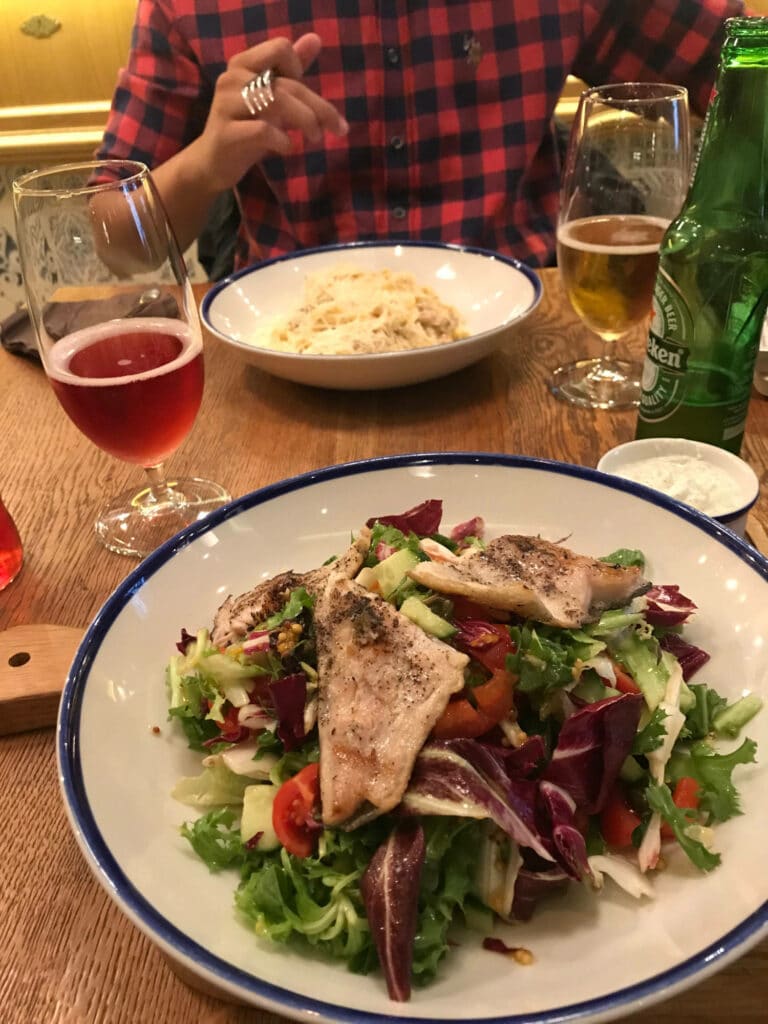
Depending on how much of an introverted person you are, the first date may be quite a cringy moment. Romanians often choose public places as the location of their first dates.
These places include, but are not limited to, malls, restaurants, coffee shops, and pubs. Less often, they choose places like cinemas or concerts. Only a few people choose to have their first date in a park or at a sports place (such as an ice rink), as these places’ availability depends very much on the weather conditions.
It is a common practice that the boy brings a bouquet of flowers on the first date. Those flowers are usually red roses, but they may vary accordingly to the girl’s preferences. Depending on the perspective he has on etiquette rules, the boy should or should not pay the first date all by himself. Yes, this is not mandatory, as the general tendency in Romania goes towards the strong independent woman model. Therefore, splitting the bill is a commonly seen approach on the first date.
There is no rule of thumb that states the appropriate dressing on the first date. Everyone chooses their outfit according to their preferences and clothing style, so if you’re going on a first date with a Romanian you do not have to wear a tuxedo or Cinderella’s dress. Please note that the appropriate dressing depends on the place you have previously agreed for the first date.
Marriage Proposal
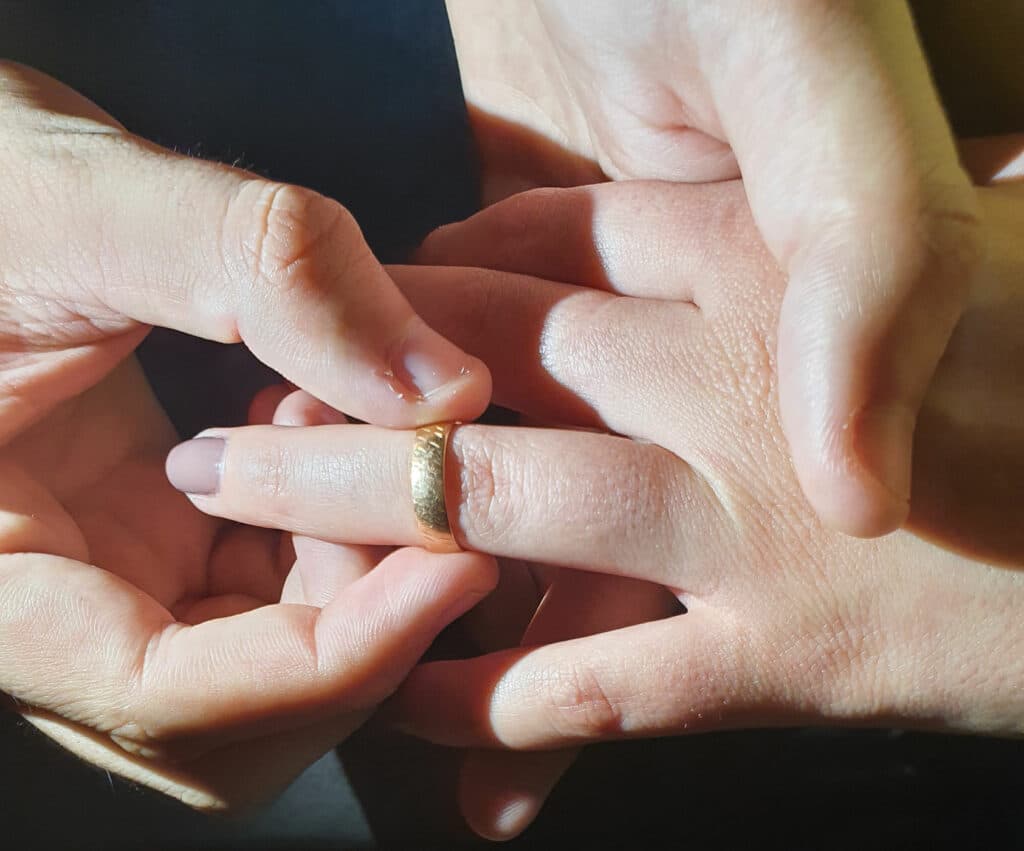
There is no certain rule of thumb that guides how to make a correct marriage proposal. During the last years, Romanians became more and more creative and came up with different crazy ideas that helped them propose to their future wives.
For example, one man arranged a cop patrol to fake-arrest him so his girlfriend would get scared and the moment will be more memorable. Another guy hired two pilots to fly their helicopters while holding a huge banner saying Vrei să fii soția mea? (Will you marry me?).
The Culture Behind Romanian Weddings
In Romanian culture, the wedding is one of the most important moments in one’s life. There are many traditions and customs that gravitate around this crucial day that are commonly seen as publicly and legally expressing your love. Romania is split into several smaller regions that have very different traditions.
Wedding Traditions in Muntenia – Gătitul Mirilor / Preparing the Lovers
The capital city of Romania (București / Bucharest) is in the Muntenia region. In this part of the country, a commonly encountered tradition is called Gătitul mirilor (Preparing the lovers). This tradition requires the two lovers to be in separate houses (the groom at his parents’ house and the bride at her parents’ house).
The groom is accompanied by the groomsmen and the godfather who have to shave the groom with a brand new razor. This tradition represents the help offered to the groom in his love life.
The bride is accompanied by the bridesmaids and the godmother who are supposed to prepare her make-up and hairdressing. Similar to shaving the groom, it shows the help given by the godmother and the bridesmaids in the new life that the bride is about to start.
Wedding Traditions in Ardeal – Spargerea Paharelor / Breaking the Champagne Glasses
Cluj is another well-known city in Romania. This city is located in a region called Ardeal, which is one of the most traditional regions in this country. Spargerea Paharelor (Breaking the champagne glasses) is amongst the most noteworthy traditions that are followed during most of the weddings in Ardeal.
This tradition requires the two lovers to drink a glass of champagne and then break it by smashing it against the floor. It is said that this tradition brings luck to the two lovers and wipes away any curse that has previously been put on either of them.
Wedding Traditions in Oltenia – Decoratul Bradului / Decorating the Tree
Located in the southwest of Romania, Craiova is amongst the most well-known cities in Oltenia. When two lovers decide to marry in this region, they have to follow several traditions. The most popular wedding tradition that is still followed today refers to decorating a tree with paper-made flowers. This action takes place during a party held at the bride’s parents’ house and is performed by the two lovers accompanied by all their close friends.
On the wedding day, the previously decorated tree is held by an unmarried boy that has to hold it by himself the entire time while the two lovers go from the church back to their new home. When they reach their destination, the tree is hung at the main gate and left that way until it withers.
One other tradition occurs on the first Sunday after their wedding when the two lovers have to organize a party at which they have to invite all their acquaintances from the village. With a huge bottle of wine from which everyone should drink, they enjoy merriment with a group of singers.
Wedding Traditions Universal Across Romania
Furtul Miresei și Plata Răscumpărării / Kidnapping the Bride and Paying for Redemption
One of the most popular traditions at all Romanian weddings is called Furtul Miresei și Plata Răscumpărării (Kidnapping the Bride). During the party, a group consisting of the godfather and several other friends take advantage of the unsuspecting groom and kidnaps the bride. They take her to an unknown place, which could be even kilometers away from the initial party location!
In order to get his wife back, the groom has to negotiate the bride’s redemption. The godfather can ask for as much as he wants, yet the usual compensation consists of alcoholic beverages. When the bride is brought back to the party, everyone claps, then the party goes on.
Dansul Tată – Fiică / The Daughter – Father Dance
During the wedding party, there is a moment that marks the evolution of the bride. It is commonly referred to as Dansul Tată – Fiică (The Daughter – Father Dance). The groom holds his wife’s hand and takes her to her father. Then, he goes back to his place while the bride and her father dance to a slow song (usually a waltz).
This particular moment is meant to express the fact that the bride’s father gives her permission to step into her new life accompanied by her husband. This is usually seen as the last moment spent under her parents’ roof.
Aruncarea Buchetului / Throwing The Bouquet
In Romania, it is a common practice that the bride blindly throws her flower bouquet. All the girls that are not married should stay in a group behind the bride. It is said that the one who catches the bouquet is the one who will marry next.
Additional Traditions
Wedding Promise
While in the church, the priest asks the two lovers to make a promise to each other. This promise is a generally-accepted one and basically says that the husband and the wife will stay close to each other not only during good times but also during bad times: Împreună atât la bine, cât și la greu / Together during both hard and good times.
Cutting the Wedding Cake
During the wedding party, one of the most important parts is the moment when the two lovers cut the wedding cake. Each of the two lovers puts their right hand on the knife, and they make a small symbolic cut from the top to the bottom of the cake. This symbolizes that they work together towards the same goal and is usually seen as a promise that the two lovers will help each other.
Throwing of Rice and Wheat

After the majority of weddings in Romania, all the guests wait for the two lovers to exit the church. While they walk towards the location of the party, their friends throw rice and wheat at them. This is associated with wishing them a wealthy life with plenty of accomplishments and is usually emphasized by saying Să aveți o viață îmbelșugată!.
Godparent Accompaniment
At the same time, the two lovers are accompanied by their godparents when exiting the church. This is a commonly-accepted representation that shows that the husband and the wife will be helped and guided throughout their new love life by their chosen godparents (the godfather and the godmother).
White Pigeons and Red Ribbons
Another quite common practice at Romanian weddings is to have two white pigeons that should be released by the two lovers after exiting the church. This symbolizes peace and purity. The two pigeons usually have a small piece of red-colored ribbon tied to their feet, used to mark them.
Fireworks!

Additionally, the end of the wedding party is marked with a firework show that lasts for about 3 to 5 minutes. This is not mandatory but is a normal part of the more modern weddings. All the guests drink champagne and cheer with the two lovers.
Luna de Miere / The Honeymoon


Just like in most countries, after the wedding, the two lovers go on a vacation that is meant to allow them to relax after the exhausting preparation of the wedding. The most commonly chosen destinations are inside the country’s borders and include traditional locations such as Maramureș and Bucovina.
For those who prefer to see more sights, the two lovers can also choose to go on a road trip through the most popular cities in Romania (for example Cluj, Timișoara, Arad, Suceava, București, etc.).
Yet, there are some couples who also choose more exotic places (such as Tenerife or Dubai) with more adventurous activities for their honeymoon.
Celebrating Years of Marriage
In Romania, it is a quite commonly seen practice to celebrate occasionally as years of marriage pass. After a certain time has passed, the two lovers should celebrate with a themed party that is named using particular materials (for example paper, wood, silver, gold, platinum, etc.).
The following nationally accepted traditions guides the two lovers in celebrating their years of marriage:
- Paper Wedding – 1 year of marriage
- Cotton Wedding – 2 years of marriage
- Leather Wedding – 3 years of marriage
- Canvas / Flowers Wedding – 4 years of marriage
- Wooden Wedding – 5 years of marriage
- Sugar / Iron Wedding – 6 years of marriage
- Wool / Cooper Wedding – 7 years of marriage
- Bronze / Clay Wedding – 8 years of marriage
- Willow Wedding – 9 years of marriage
- Tin / Aluminum Wedding – 10 years of marriage
- Steel Wedding – 11 years of marriage
- Silk Wedding – 12 years of marriage
- Lace Wedding – 13 years of marriage
- Ivory Wedding – 14 years of marriage
- Crystal Wedding – 15 years of marriage
- Porcelain Wedding – 20 years of marriage
- Silver Wedding – 25 years of marriage
- Pearl Wedding – 30 years of marriage
- Ruby Wedding – 40 years of marriage
- Golden Wedding – 50 years of marriage
- Amethyst Wedding – 60 years of marriage
- Platinum Wedding – 70 years of marriage
- Diamond Wedding – 75 years of marriage
Although not every couple follows these traditions, the most commonly-celebrated are the Wooden, Crystal, Silver, Golden, and Diamond. The two lovers are supposed to buy each other a gift that represents the material associated with the celebration. For example, the husband can buy a golden necklace for his wife as a gift when celebrating the Golden Wedding (after 50 years of marriage).
The longest marriage in Romania is said to be in Bistrița. The two lovers claim to be married continuously for the last 75 years. Unfortunately, this fact is certified only by the local authorities, as the Guinness World Record Book does not have any valid certification regarding this aspect.
Religious Marriage vs. Legal Marriage
Religious marriage and legal marriage are two distinct things in Romania. The first one takes place in a church and does not have any legal value. On the other hand, the latter takes place in front of a Marriage Officer which certifies that the bonding of the two lovers is legally-recognized by all the state institutions. In this case, a marriage certificate is also emitted. This certificate helps the two lovers perform legal actions, such as splitting taxes, requesting a loan, etc.
In the unfortunate occurance that the couple realizes their relationship is not working after the wedding, religious marriage does not require any physical action to be taken in order to cancel it. However, if two lovers are legally married, they will have to file a divorce request and go in front of a judge that will intermediate the entire process.
Love in Public Places in Romania
The etiquette rules followed in Romania are quite easy-to-understand. Romanians are not that sensitive when it comes to seeing two lovers showing affection to each other, even in public places. However, showing your love should not cross a certain generally-accepted limit.
Holding hands or kissing in public places is acceptable. Hugging is okay too. Yet, gestures that usually belong to the sexual sphere should only be performed in intimate places (for example at home or in the hotel room).
Overexpressing your love in public places might not only bring you passers-by’s contempt but also a fine from the local policemen that are meant to maintain the public order.
Romanian Superstitions Referring to Love
In different parts of the country, there are certain sayings that guide the love life of superstitious people. These superstitions are transferred from one generation to another, yet there are fewer and fewer people that take them into account.
For example, it is said that if you are at a rectangular table and you sit in a corner, you will probably not marry at all during your lifetime. Another well-known superstition is that those who do not eat the corner part of the bread (commonly called colțul pâinii or coltuc) will never get along with their mother-in-law.
On the 30th of November, in Romania, we celebrate Sfântul Andrei (St. Andrew). On this day, single girls put several leaves of basil under their pillow. It is said that they will dream of their future husband. This superstition is commonly referred to as A își visa ursitul.
Romanian women are advised not to wear their wedding dress before actually marrying. This applies even to photo sessions. The bride should not wear her dress under any circumstances before the wedding day, besides when buying it, of course.
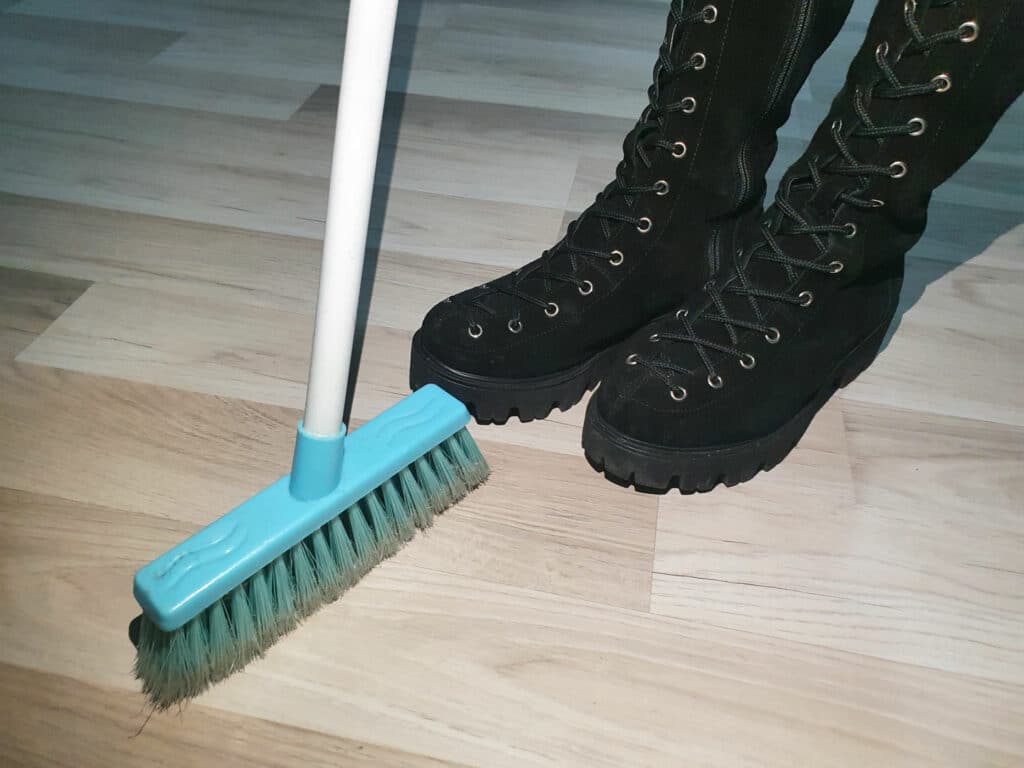
All Romanians tend to walk away when someone sweeps around them. This is not an early sign of a dust allergy, but a superstition that says that if someone sweeps your shoes then you will have a bad love life.
Common Romantic Travel Locations
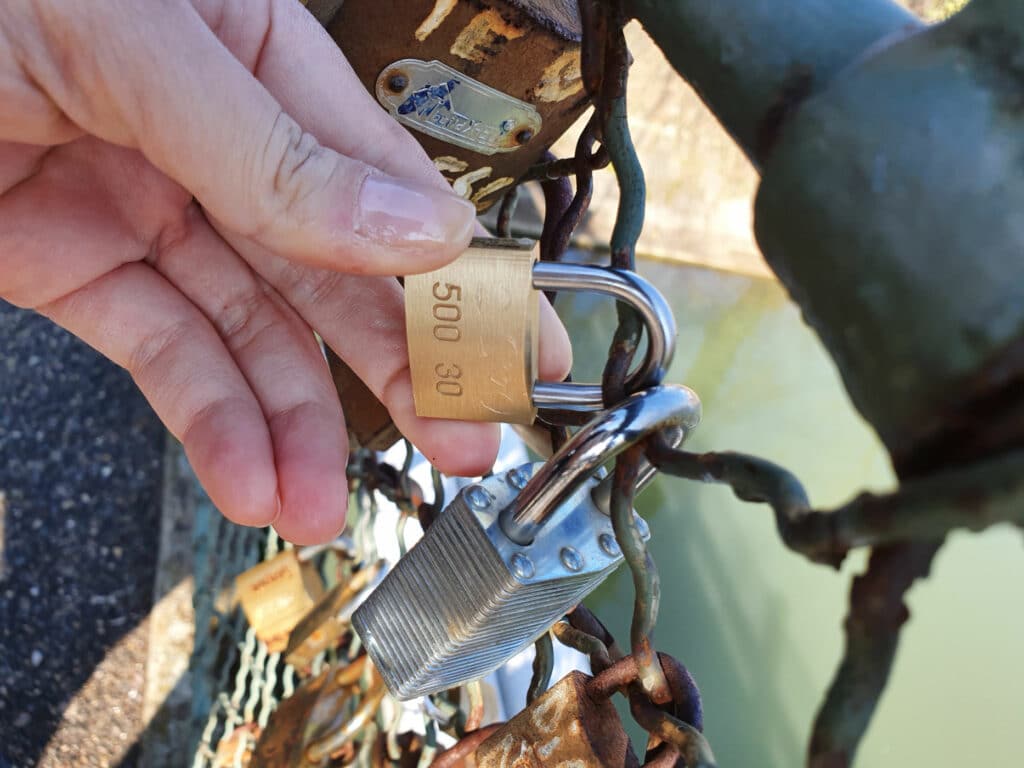
There are several iconic places that lovers often visit in Romania. These places include some well-known bridges where couples go and put locks on the railing of the bridge. This symbolizes their eternal love and the fact that their relationship will remain locked forever. After placing the lock in the desired place, the two lovers throw the key into the water so that none of them will be able to open the lock and break the spell.
Another common place where lovers go in Romania is called Podul Minciunilor / The Bridge of Lies. It is said that those who go on that bridge and tell a lie will cause the bridge to fall. Therefore, the two lovers go there and tell each other Te iubesc / I Love You, in order to see if either of them is telling a lie.
Finally, one of the most popular attractions in Romania is called Poarta Sărutului / The Gate of the Kiss. It is a famous sculpture made by the famous Romanian sculptor Constantin Brâncuși. People say that those who kiss under The Gate of the Kiss will have a love life that will last for a lifetime.
Conclusion – Love in Romania
To put everything in a nutshell, Romanians are people with a strong love culture. They express their feelings in a unique way. Certain aspects of their love are celebrated using local traditions that have unique and powerful meanings while other aspects embrace modern ideas.
If you enjoyed this article, please read the others in the Love Series. All of them are linked there and are a good cultural learning opportunity.
Please share with your friends using the buttons below and sign-up for our newsletter to receive advice straight in your inbox.
]]>